Storm Preparation:
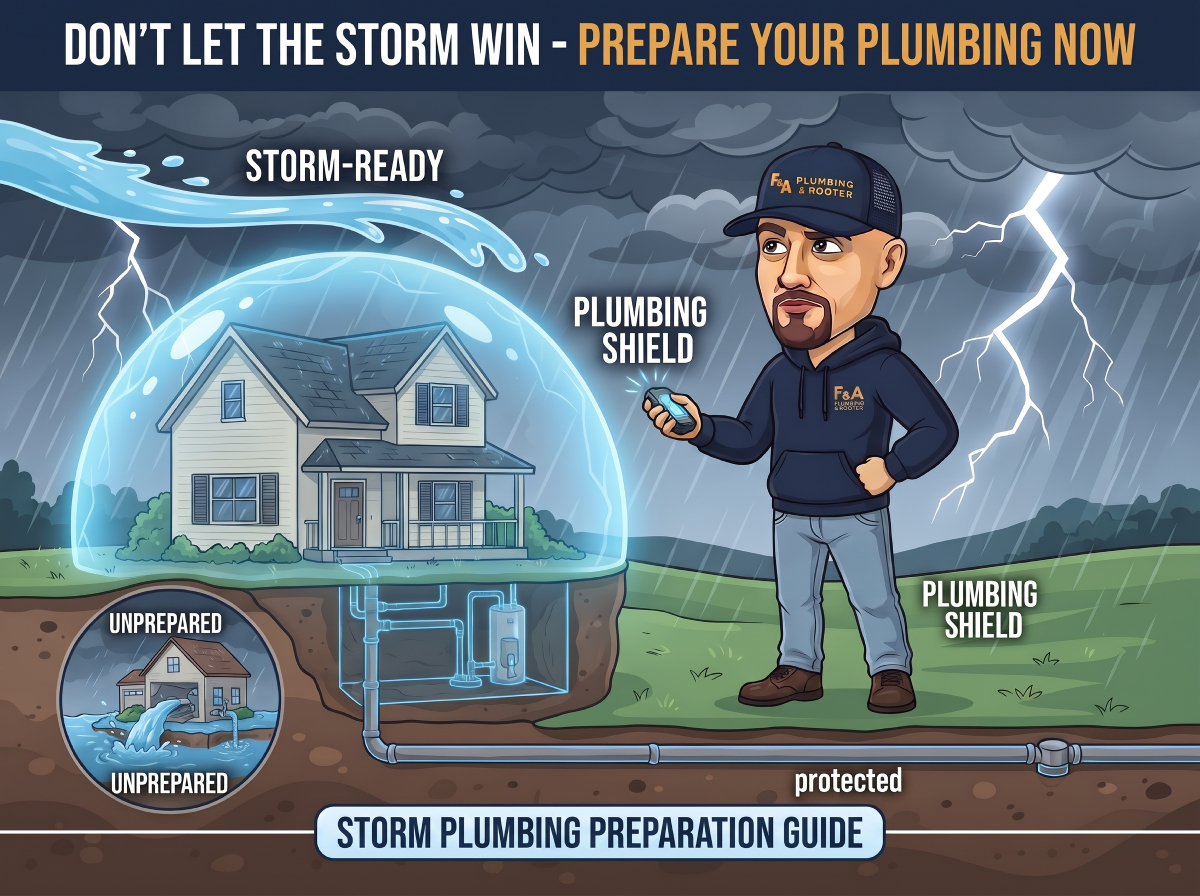
When atmospheric rivers slam into the Bay Area, the sheer volume of water places relentless stress on your home’s hidden plumbing infrastructure. Within minutes, torrential downpours can overwhelm ground-level drains, saturate surrounding soil, and push underground sewer laterals past their absolute limits. As a result, heavy rainfall during a major Bay Area storm places massive stress on your home’s plumbing system.
Waiting for wastewater to back up into your living spaces instantly turns a minor, manageable maintenance item into a messy, expensive emergency. But you don’t have to wait for disaster to strike your doorstep. Embracing proactive storm preparation keeps your entire drainage system flowing smoothly, protecting your property long before the first heavy raindrops hit the pavement.
Here are the TOP 5 storm-related plumbing issues and the preventive maintenance solutions that protect your property!
1. Main Sewer Line Backups and Municipal Surcharges

When severe rainstorms strike, municipal sewer mains often reach maximum capacity, causing your yard to flood with contaminated overflow. Hydraulic pressure then forces raw sewage backward through private sewer laterals into your home. Consequently, contaminated water pushes upward into low-lying toilets, showers, and ground-floor drains, creating severe health hazards and costly property damage.
Ignoring these warning signs leads to catastrophic consequences for your health, property, and wallet. Persistent moisture often leaves behind standing water in a crawl space, inviting mold and structural rot. Investing in expert sewer backflow valve installation permanently blocks these messy intrusions, protecting your family’s health and saving thousands in unexpected repairs.
Preventive Maintenance Solutions
In order to prevent sewer backup, we recommend the following solutions:
Sewer Camera Inspection: A plumber uses a sewer camera to inspect your underground lateral line. This sewer camera inspection spots root intrusion, cracks, and pipe sags before storm season starts. Early detection helps you schedule sewer line root removal before total blockages occur.
Sewer Backwater Valve Installation: A professional installs a sewer backwater valve inside your sewer line. This backwater valve for sewer systems allows wastewater to exit your home naturally. Furthermore, it automatically seals shut when city mains surcharge back toward your property.
Sewer Lateral Inspection: Scheduling a sewer lateral inspection ensures compliance with local municipal standards. In addition, it confirms your lines can handle high-volume flow during heavy rain.
2. Basement and Crawlspace Flooding from Sump Pump Failure

Sump pumps fail during critical moments due to power outages or unexpected mechanical wear after months of standing idle. In addition, clogged intake screens, jammed impellers, and stuck float switches also cause sudden system shutdowns when you need them most. Without a reliable backup power source or routine seasonal checkups, these hidden vulnerabilities leave your basement entirely defenseless against rising groundwater.
Therefore, addressing these potential mechanical failure points proactively ensures your flood protection system activates flawlessly during the next severe storm. Moreover, investing in professional sump pump installation services guarantees your new unit is properly sized and configured before heavy weather hits. When an old pump fails completely, standing water in a crawlspace quickly causes structural damage and mold growth. Furthermore, crawl space standing water destroys foundation elements rapidly.
Preventive Maintenance Solutions
To provide the best storm flood protection for your home, we suggest the following solutions:
-
Dual Sump Pump Installation: Installing a primary unit alongside a battery-powered secondary pump offers complete protection. A dual sump pump installation ensures continuous operation during severe power blackouts.
-
Sump Pump Maintenance: Regular upkeep prevents sudden failures during heavy downpours. A plumber performs a sump pump check valve replacement and tests the switch movement. Moreover, replacing worn components through a sump pump float replacement keeps the motor running reliably.
-
Crawl Space Drainage System Installation: Combining a pump with a full crawl space drainage system prevents water buildup under your subfloor. Consequently, your home stays dry even during prolonged storm events.
3. Yard Drain and French Drain Overflows

Leaves, silt, and outdoor debris accumulate inside catch basins and drainage pipes over time. As seasonal winds blow and autumn foliage drops, organic matter settles deeply into hidden subterranean channels. During intense rain bursts, a clogged storm drain causes immediate surface flooding across walkways, driveways, and lawns. Without a clear path for rainwater to escape, pooling water quickly swallows low-lying exterior areas leaving your yard flooded.
As a result, yard floods erode valuable topsoil and damage surrounding landscaping, destroying flower beds and root systems. Persistent moisture also drowns turf grass and weakens exterior hardscapes. Furthermore, standing water can also seep into your home’s foundation walls, threatening structural stability and inviting costly dampness into your crawlspace or basement.
Preventive Maintenance Solutions
To protect your home and prevent sewer backup, we recommend the following:
-
Catch Basin Cleaning Service: Professional storm drain cleaning services clear out packed mud, leaves, and trash. A catch basin cleaner uses specialized tools to restore proper water flow through the system.
-
French Drain System Installation: An exterior french drain installation redirects heavy surface runoff away from low points. Furthermore, a foundation french drain installation protects your outer walls from soil saturation.
-
Channel Drain Driveway Install: Installing trench drains across driveways stops water from cascading toward garages. In addition, a proper trench drain installation routes heavy runoff directly into safe discharge outlets.
4. High Water Pressure Spikes and Pipe Stress

Saturated soil causes severe ground movement that silently shifts buried utility lines and underground connections beneath your yard. Meanwhile, municipal water providers frequently adjust system delivery pressures during major storm events to compensate for surging regional demand and infrastructure strain. These rapid, volatile pressure shifts place immense mechanical stress on aging copper, cast iron, and galvanized plumbing pipes hidden within your walls and foundation.
Without warning, vulnerable pipe joints and corroded fittings fracture under the immense strain, leading to sudden, destructive interior leaks that flood your living spaces. By the time damp drywall or pooling water makes the rupture visible, thousands of dollars in structural and cosmetic damage have already occurred. Maintaining stable water regulation and inspecting your lines before heavy weather hits is the only reliable way to prevent these catastrophic interior plumbing failures.
Preventive Maintenance Solutions
In order to protect your home from high water pressure, please follow the below instructions:
-
Pressure Regulator Valve Audit: A technician tests your incoming main water pressure to ensure it stays below harmful levels. Adjusting this valve prevents sudden pressure spikes from damaging household fixtures.
-
Emergency Shut-Off Valve Relocation: Moving hard-to-reach main valves to accessible locations allows for fast action during leaks. In addition, quick control over your water supply minimizes structural water damage.
-
Targeted Repiping: Replacing brittle, corroded pipe sections in exposed garages or subfloors increases overall system durability. Consequently, your plumbing handles environmental stress much better.
5. Tree Root Intrusion in Private Laterals

Heavy autumn rains overwhelm municipal sewer systems fast. In addition, an obstruction causes a main line backing up into residential homes. Overflowing wastewater ruins hardwood floors and drywall instantly. Therefore, immediate preventive action remains absolutely vital.
Moreover, aggressive tree roots infiltrate underground sewer pipes over time. Furthermore, ignoring this persistent damage leads to expensive emergency repairs. Based on these important factors, proactive plumbing inspections catch blockages early. Ultimately, protecting your property saves thousands of dollars.
Preventive Maintenance Solutions
To prevent tree roots from damaging your pipes, we suggest the following solutions:
-
Hydro Jetting Storm Drain: High-pressure hydro jetting scours the interior walls of your drain lines. This process slices through stubborn tree roots and washes away settled grease completely.
-
Trenchless Pipe Relining: Technicians insert an epoxy liner directly into your existing underground pipe. This seamless liner seals off open joint cracks so roots cannot re-enter the system.
-
Routine Drain Camera Inspections: Regular video pipe checks catch root growth early. Preventive maintenance lets you clear small root invasions before they cause complete pipe blockages.
Essential Storm Preparedness Checklist for Homeowners

Conducting simple storm season preparation steps helps prevent major property losses. Taking a few proactive moments today ensures your home remains secure against rising water and severe weather. Implementing these targeted defense measures provides complete peace of mind all winter long. Review this quick checklist before the next rainstorm arrives:
-
-
Clear leaves and pine needles from every catch basin yard drain.
-
Test your primary sump pump by pouring a bucket of water into the basin.
-
Verify that your secondary battery backup pump charges correctly.
-
Schedule a professional sewer camera inspection for older lateral lines.
-
Inspect downspout extensions to ensure water discharges away from foundations.
-
Locate your main water shut-off valve and test its movement.
-
FAQ for Plumbing Storm Season Preparation

Navigating severe weather requires clear answers and reliable guidance. Therefore, reviewing expert plumbing safety precautions helps you avoid costly emergencies. Furthermore, implementing proper storm flood protection safeguards your entire home. Learn more about the most common plumbing storm related questions and answers below.
What simple storm preparation steps can I take to prevent emergency plumbing leaks during heavy rain?
To prevent emergency plumbing leaks during heavy rain, start by clearing leaves, silt, and debris from your outdoor catch basins, gutters, and driveway channel drains to ensure unrestricted water flow. Next, test your sump pump by pouring a bucket of water into the basin to confirm the float switch triggers and the backup battery is fully charged. Finally, inspect your sewer cleanout access, ensure exposed outdoor pipes are properly insulated, and schedule a professional sewer camera inspection to clear any main line tree roots before atmospheric rivers strike.
How often should a residential storm drain clean out be inspected and cleared?
A residential storm drain clean out should be inspected at least twice a year—once in late autumn before the rainy season begins and once in late spring after major storms have passed. Regular annual clearing prevents leaf buildup, silt, and tree roots from causing severe yard flooding or backup damage to your home’s foundation. Additionally, you should inspect your clean out immediately after any major atmospheric river or heavy storm to ensure the main drainage line remains completely free of debris.
Where can I find a plumber for sewer backup in the San Francisco Peninsula?
When raw sewage backs up into your Peninsula home during an atmospheric river or unexpected pipe blockage, every minute counts. A true sewer emergency demands far more than basic drain snaking—it requires rapid biohazard control, heavy-duty hydro-jetting, and deep expertise across South San Francisco, San Mateo, Redwood City, and Palo Alto. As a trusted local specialist backed by glowing Google reviews, F&A Plumbing delivers the fast intervention you need. Choosing our expert team immediately protects your family’s health, stops structural damage, and prevents tens of thousands of dollars in emergency restoration costs.
How much does a channel drain installation cost?
On average, a professional residential channel drain installation costs between $1,500 and $4,500 (roughly $30 to $150 per linear foot), with most homeowners spending around $2,800. Simple installations in soft soil or gardens fall on the lower end of the spectrum, while retrofitting a channel drain across an existing concrete or asphalt driveway requires diamond-blade saw cutting, excavation, and fresh concrete encasement, which pushes costs to $70–$150+ per foot. Final pricing depends on total trench length, grate material choices (such as lightweight plastic versus heavy-duty cast iron for vehicle traffic), and how far underground piping must run to direct stormwater safely away from your home’s foundation.
Where can I find the best storm drain cleaning service near me?
To find the best storm drain cleaning service nearby, look for licensed plumbing and drain specialists who offer 24/7 emergency response, high-pressure hydro-jetting, and HD video camera inspections. Industrial-grade hydro-jetting is essential to clear heavy silt, leaves, and invasive tree roots from catch basins, driveway channel drains, and outdoor French drains that standard cable snakes cannot reach. F&A Plumbing offers expert storm drain cleaning services. In addition, our local Bay Area specialists ensure your drainage system is properly cleared and maintained in order to prevent severe yard flooding and foundation damage before major rainstorms hit.
How much does a sewer camera inspection cost?
The cost of sewer camera inspection can average between $250 and $450. This price usually includes a standard trip fee, the actual inspection of the main lateral line (the pipe connecting your house to the city sewer), and a digital copy of the recorded footage. This footage is invaluable for diagnosing problems or proving the health of your system to a buyer. A critical note: In some markets or for complex scenarios, the lowest prices might start around $100, while specialized high-access situations could reach $600 or more.
What is a sewer backflow preventer valve, and how does it protect my home during a severe storm?
A sewer backflow preventer valve is a specialized one-way check valve installed directly into your main sewer lateral line. When intense rainfall overwhelms municipal sewer mains and forces wastewater backward, this valve automatically snaps shut. It blocks municipal overflow from pushing up through your toilets, showers, and floor drains, permanently safeguarding your living spaces against toxic blackwater contamination and costly property damage.
Protect Your Property with Proactive Peninsula Plumbing Services

Severe storms can flood your basement before you even realize danger is near. Routine plumbing maintenance keeps your property completely dry when heavy weather arrives. Protecting your property investment requires staying proactive against rising groundwater, overflowing gutters, and saturated soil. Taking these early steps safeguards your home’s structural integrity and prevents expensive structural repairs down the road.
Clear your rain drain pipes and schedule expert sump pump replacements right away before the next heavy downpour strikes. Professional video inspections uncover hidden drainage faults, root intrusions, and pipe cracks before costly backups occur. Lastly, ensuring your drainage equipment and primary pumps operate at peak performance prevents stressful emergency repairs during major regional storms.
Looking for a Flood Plumber in The Bay Area?
Secure your home now so your family stays safe, comfortable, and dry all winter long. Taking action today guarantees ultimate peace of mind all season, ensuring your household remains fully protected against unpredictable weather. Whether it’s a storm drain unclog or other storm related plumbing issues, we can help! For any plumbing storm preparation services, CONTACT F&A Plumbing TODAY!
Learn More About F&A Plumbing
Visit Our Homepage To Get Started
Check Out Our Blog
Follow Us On Instagram