Sewer Line Cleaning 101:
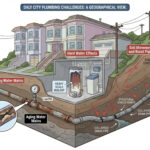
The San Francisco Peninsula features some of the most beautiful neighborhoods in California. From the tree-lined avenues of Burlingame and San Mateo to the hillside properties in San Bruno, Redwood City, and Millbrae, mature greenery adds incredible character and value to local homes. However, those same magnificent oak, maple, and liquidambar trees often pose a hidden threat beneath your front lawn. This threat can lead to costly sewer line cleaning if not maintained properly.
Underneath the soil, growing root systems constantly search for nutrients and water. Eventually, aggressive underground roots find their way into residential wastewater pipes. Consequently, tree roots in the sewer line trigger severe plumbing emergencies for unsuspecting local homeowners every single year.
Understanding the mechanics of sewer line root intrusion helps you identify early warning signs quickly. Furthermore, taking proactive steps allows you to protect your property before an expensive backup occurs.
The Root Cause of Main Drain Clogs in Peninsula Sewer Pipes

Many homes across the Peninsula were built between the 1940s and 1970s. During this era, home builders commonly installed clay or cast-iron sewer laterals to carry household wastewater to municipal main lines. While these materials were standard for their time, decades of subtle ground movement, seismic activity, and soil settling create small fractures at pipe joints.
Simultaneously, tree roots act as natural moisture sensors. During dry California summers or periods of low rainfall, trees extend their root systems outward to survive. Roots easily detect the warm water vapor and nutrients escaping from microscopic pipe cracks. Therefore, aggressive tree roots in plumbing pipes grow directly toward the source of moisture.
Once a micro-root enters a tiny crack, it finds an ideal growing environment filled with water and organic waste. Inside the pipe, the root expands rapidly. What starts as a hairline intruder soon blossoms into a dense, net-like mass. Over time, these masses catch toilet paper, grease, and household debris. Eventually, tree roots clogging sewer lines block the entire wastewater exit path from your home causing main drain clogs.
Common Signs Your Main Sewer Line Has Root Damage

Identifying roots in plumbing before total system failure saves homeowners thousands of dollars in emergency restoration costs. Because main line blockages affect your entire household drainage system, symptoms usually appear in multiple places at once.
Pay Close Attention to These Primary Main Sewer Line Clog Symptoms:
Slow Drains Whole House: When a single sink drains slowly, you likely have a localized fixture clog. However, if your kitchen sink, shower, and laundry tub all drain slowly simultaneously, your main drain is clogged.
Gurgling Toilets and Fixtures: Does your toilet bubble or make strange gurgling sounds when your washing machine drains? Air trapped behind a root mass forces its way up through water traps, creating distinct air pockets.
Recurring Main Line Backups: If your sewer line keeps backing up every few months despite routine clearing, roots have likely established a permanent stronghold inside the pipe walls.
Unusual Lawn Conditions: A broken sewer lateral releases nutrient-rich water into the surrounding soil. If you notice an unusually lush, green patch of grass or soggy soil directly above your sewer lateral line, roots are likely feeding on an active leak.
Foul Odors: Sewer gas escaping through cracked pipes or backed-up drains creates persistent foul smells around your yard or crawlspace.
If you observe these warning signs, stop running water immediately. Continuing to run appliances or flush toilets while your sewer line is clogged will inevitably cause raw sewage to spill over low-lying fixtures like shower drains and toilets. This is where plumbers who specialize in sewer line unclog services come in handy!
Forget Store-Bought Chemicals: How Experts Permanently Clear Sewer Roots

When homeowners discover a blockage, they often ask what kills tree roots in sewer lines? This is usually when homeowners consider store-bought chemicals. While chemical treatments can slow down future growth, chemical products alone cannot remove heavy, dense root masses already filling a pipe. Moreover, such methods are not how professionals manage tree root intrusions. Mechanical clearing performed by an experienced professional provides the only reliable solution.
How to Get Rid of Roots in Sewer Line
Eliminating destructive tree roots requires a systematic approach using specialized plumbing equipment. Expert plumbers follow three essential steps to safely eradicate root blockages for good. Below are the steps professional plumbers take:
HD Sewer Camera Inspection
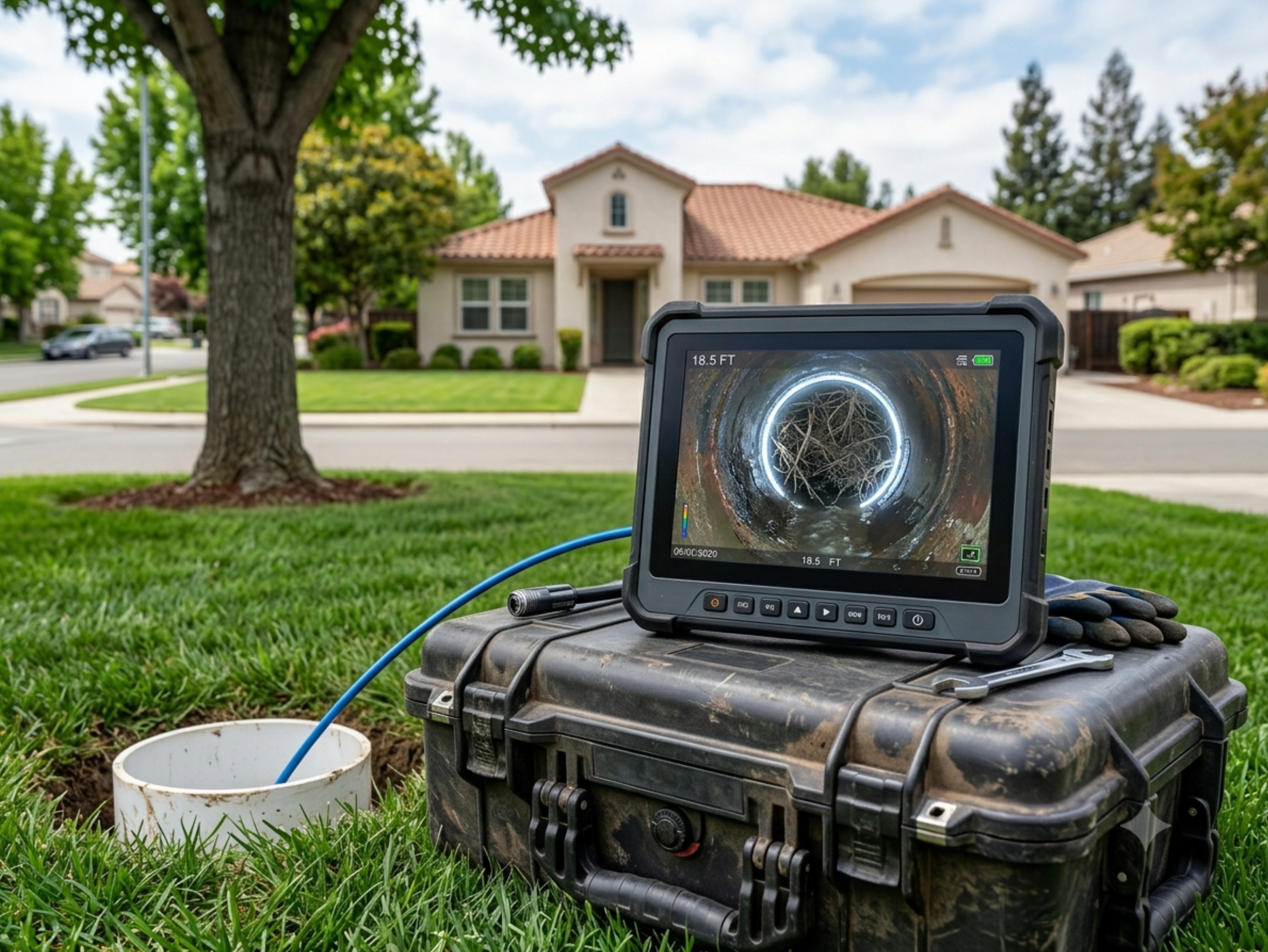
Professional diagnosis always begins with a video scan. Technicians insert a flexible cable equipped with a specialized sewer pipe video inspection camera directly into your pipe cleanout. This non-invasive diagnostic process allows plumbers to view the interior of your line in real time on a color monitor. A detailed sewer camera inspection accomplishes several critical tasks.
Firstly, it confirms whether tree roots in the sewer pipe are causing the blockage rather than a collapsed pipe or heavy grease buildup. In addition, it pinpoints the exact distance and depth of the intrusion from your home’s exterior cleanout. Moreover, it evaluates the structural integrity of the surrounding pipe walls to ensure high-pressure cleaning equipment is safe to use. Lastly it provides precise information to accurately calculate the sewer line inspection cost and any subsequent repair estimates.
Knowing the exact condition of your lines upfront prevents costly guesswork and ensures you only pay for the specific repairs your system actually needs.
Precision Sewer Snaking
Once the technician locates the blockage, traditional sewer snaking provides immediate relief. A professional mechanical rooter machine feeds a heavy-duty steel cable into the pipe. The tip of the cable features spinning steel blades specially designed for tree root removal from sewer line walls.
As the motor rotates the cable at high speeds, the blades punch directly through dense root masses, chopping them into smaller, flushable fragments. Homeowners frequently choose a snaking sewer line service during emergencies because it breaks through dense blockages quickly and restores basic household flow right away.
Hydro Jet Sewer Line Cleaning
While snaking restores immediate drainage, it acts as a temporary relief method. Standard snake blades chop through the center of a root ball but often leave stubble along the inner pipe edges. Those remaining root stumps quickly catch new debris, causing blockages to return within months.
To eliminate root stubble entirely, plumbers utilize hydro jet sewer line cleaning. This advanced process uses a high-pressure water pump attached to a specialized nozzle that sprays water at up to 4,000 PSI.
So, is hydro jetting better than snaking? Absolutely. While sewer snake plumbing merely cuts a hole through a clog, hydro jetting tree roots completely scours the entire interior circumference of the pipe. The intense water streams blast away stubborn root ends, grease, scale, and heavy sludge, washing the debris safely out to the municipal sewer line. Learn more about hydro jetting here!
Comparing Methods: Hydro Jetting vs. Snaking

Selecting the appropriate service relies completely upon your immediate situation, budget, and pipe material. Choosing between traditional sewer line snaking and advanced hydro jetting requires understanding how each method functions. While one offers immediate emergency relief, the other provides a comprehensive, long-term cleaning solution. We have summarized the critical distinctions between these two plumbing methods in the helpful comparison infographic below.
Review the infographic data to determine which method best serves your specific needs. Understanding factors like tool design, root removal depth, and long-term value ensures you make an informed decision for your Peninsula home. While some scenarios only require a quick emergency clearing, others demand a robust sewer jetting service for complete tree root eradication. Consequently, this detailed visual guide helps property owners select the most efficient method to destroy tree roots in drainage pipes.

Long-Term Solutions to Prevent Root Regrowth
After completing successful root removal in sewer line pipes, taking proactive maintenance steps prevents roots from destroying your plumbing system again in the future. First, homeowners should apply professional foaming root inhibitors annually. These special chemical treatments coat the inner pipe walls and kill invading roots without harming your trees.
Additionally, schedule routine sewer cleaning services to clear minor intrusions before they expand. For instance, booking a regular sewer jetting service effectively scours away young roots and grease buildup. Consequently, maintaining clean pipe walls prevents a catastrophic main line sewer backup during heavy rain storms.
Furthermore, install a modern backwater valve to protect low-lying drains from sudden wastewater overflows. Finally, consider permanent pipe lining if you frequently find stubborn tree roots in drain pipe scenarios. Together, these proactive strategies provide complete sewer root removal and peace of mind for Peninsula property owners.
Apply Annual Root Inhibitors
Once your line is clear, ask your plumber about professional-grade foaming root killers. These treatments fill the entire pipe cavity with an active foam that coats root ends at the top and sides of the line. The foam kills root cells on contact without harming the tree above ground, effectively preventing new shoots from penetrating the pipe joints.
Schedule Preventative Camera Scans
Don’t wait for a major backup to think about your plumbing. Scheduling a routine camera inspection of your sewer line every 12 to 18 months allows you to monitor root activity. Catching micro-roots while they are small keeps your main sewer line cleaning cost low and prevents sudden weekend plumbing disasters.
Consider Trenchless Pipe Lining
If your clay or cast-iron pipes feature recurring root intrusion points, mechanical cleaning becomes a repeating expense. In these cases, trenchless epoxy pipe lining offers a permanent fix. Technicians insert a resin-saturated liner inside your existing pipe, blowing it up like a balloon. Once the epoxy cures, it creates a smooth, seamless, joint-free “pipe within a pipe” that tree roots cannot penetrate.
Sewer Line Clean Out FAQs

Understanding how to maintain your home’s plumbing protects your property value and prevents sudden emergencies. Below, our local experts answer common questions about root intrusion and main drain cleaning service options. Read on to learn how to remove roots from a sewer line effectively and keep your pipes flowing freely.
-
-
How often should sewer lines be cleaned?
Generally, homeowners should schedule professional sewer line cleaning every 18 to 24 months as preventative maintenance. However, older Peninsula homes with mature trees nearby require annual inspections and sewer line cleaning to prevent root intrusion. Furthermore, homes experiencing frequent gurgling drains or slow toilets should schedule cleaning services immediately. Proactive routine maintenance catches minor blockages early and prevents costly, unexpected main line backups.
-
What is the cost of sewer camera inspection?
On average, a professional sewer camera inspection costs between $250 and $500 for standard residential plumbing. However, total sewer line inspection cost factors depend on pipe accessibility, cleanout location, and property length. Furthermore, many Peninsula plumbing companies apply the inspection fee toward your total repairs if you require cleaning. Investing in a video scan upfront accurately pinpoints root blockages and prevents expensive, unnecessary pipe repairs.
-
How much is a main sewer line clog repair cost for clearing tree roots?
Typically, a basic main sewer line clog repair cost can range from $200 to $600 for standard snaking services. However, advanced hydro jetting or heavy root removal in sewer line pipes usually costs between $500 and $1,200. Furthermore, major structural repairs or trenchless replacements for severely damaged pipes can range from $3,000 to $7,500. Requesting an initial video scan helps determine the exact blockage severity and provides an accurate upfront repair price.
-
What is the difference between hydro jetting vs snaking?
Drain snaking uses a flexible metal cable to punch a hole through simple, localized blockages. Conversely, hydro jetting uses high-pressure water streams to scour grease, scale, and roots off pipe walls entirely. While snaking offers a quick, low-cost fix for isolated clogs, hydro jetting provides a comprehensive, long-lasting cleaning. Choosing hydro jetting removes total interior buildup and prevents frequent, recurring sewer line backups in Peninsula homes.
What dissolves tree roots in sewer lines?
Store-bought chemicals or foaming root killers can temporarily slow small root growth inside pipes. However, chemical products cannot dissolve heavy, dense root masses already clogging your main wastewater line. Instead, mechanical snaking and high-pressure hydro jetting provide the only reliable method to completely clear tree roots. Relying solely on pour-in chemicals leaves severe blockages intact, leading to inevitable, costly sewage backups in your home.
-
Get Reliable Sewer Cleaning Service Near You

A main line backup causes immense stress, property damage, and costly cleanup fees. Fortunately, you do not have to fight underground tree roots alone. Taking action at the first sign of a gurgling drain or slow toilet keeps your home safe and dry.
Our team provides comprehensive sewer drain cleaning service, advanced video diagnostics, and long-term root removal solutions tailored to Peninsula homes. Contact our local team today to schedule your sewer camera inspection and protect your property from hidden tree root damage!
Tree Roots in Sewer Line Removal
Are you looking for sewer line drain cleaning services in the Peninsula? If so, contact F&A Plumbing TODAY! Whether you’re dealing with stubborn tree root intrusions, slow drains, or a complete main line backing up, we can help. Our professionals have the proper sewer drain cleaning equipment and localized expertise to clear your pipes quickly and safely!
Learn More About F&A Plumbing
Visit Our Homepage To Get Started
Check Out Our Blog
Follow Us On Instagram